




Enter your email address to login
Don't have an account?
Liver Transplant in India: Survival Rates, Cost and What Sets India Apart
Liver Transplant, Survival Rates, International Patients

 August 20, 2026
 6 Min Read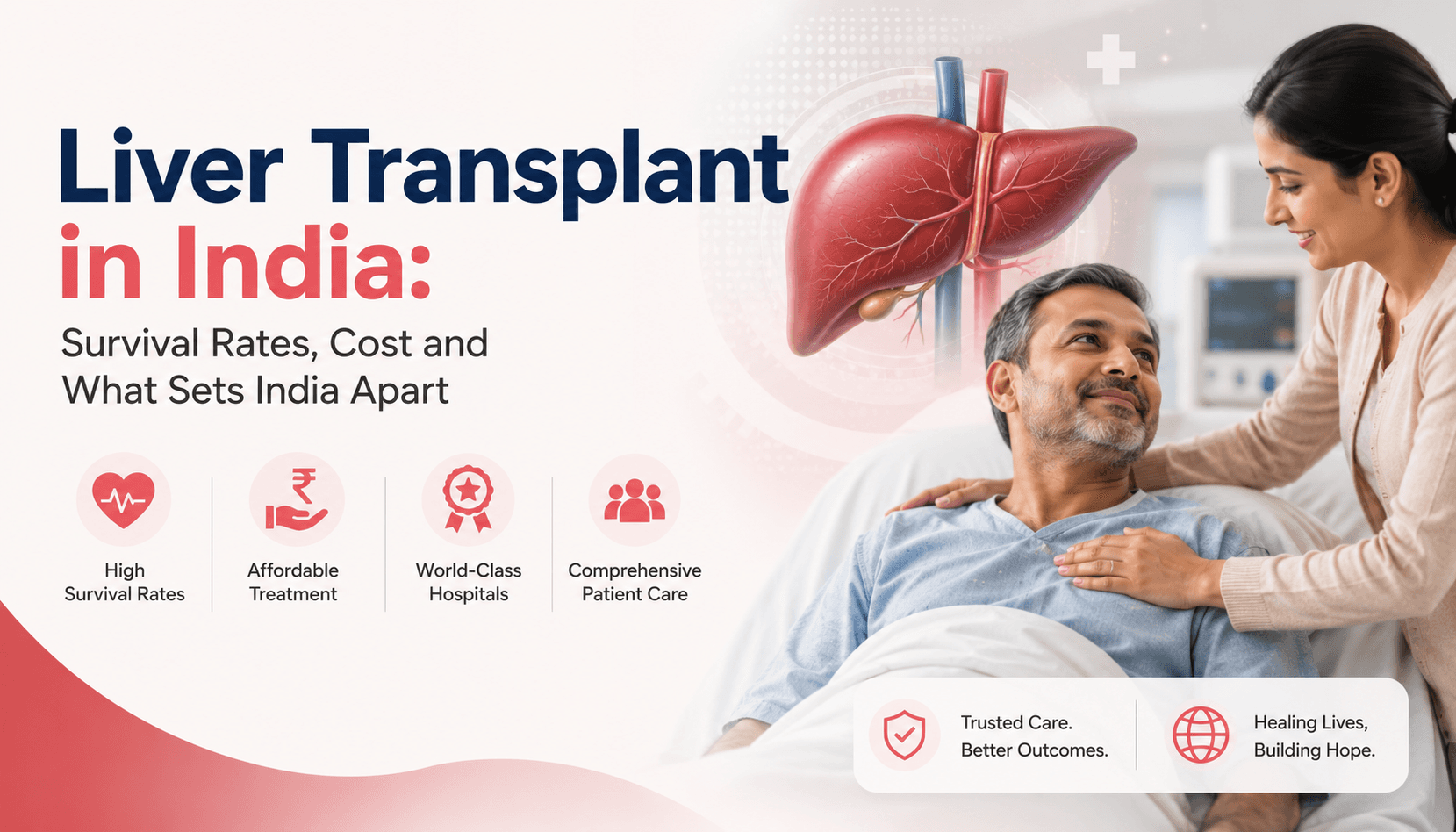
Introduction
In the case of patients suffering from end-stage liver disease or acute liver failure, liver transplantation can prove to be lifesaving surgery. Liver Transplant In India has become renowned across the globe for its highly skilled surgeons, advanced medical infrastructure, and affordable treatment. Every year, thousands of patients all over the world visit India for the purpose of getting themselves operated on for liver transplant surgeries due to the experienced doctors, top-notch hospitals, and quality services provided to the international patients.
Of course, one of the main worries of patients and their loved ones is to know the chances of success in liver transplant survival and the costs of surgery. However, it should be mentioned that the top-rated transplant centers in India have proven to provide results which are no less than those in developed countries but at extremely low prices. With the help of advanced surgery equipment, experienced teams, and customized post-treatment procedures, patients can enjoy high-quality services.
All these aspects will be covered in this guide on Liver Transplant in India – who needs a liver transplant, chances of survival, cost of treatment, recovery, and the most important factors which have made India one of the leading nations for liver transplant surgery.
What Is a Liver Transplant?
Liver transplantation refers to a medical operation in which the diseased liver is surgically removed and replaced with a healthy donor organ. It is normally considered in cases where the liver has been irreversibly damaged to the extent that it is unable to carry out its vital functions of eliminating waste products, synthesizing proteins, among other activities. Liver transplantation is generally seen as the only chance for survival in case of advanced stages of liver disease.
Liver transplantation comes in two major forms, which include:
Living Donor Liver Transplant (LDLT)
In this type of liver transplantation, a healthy person gives away part of his or her liver to the recipient. Because the liver has the capability of regenerating itself, after the procedure both the recipient and donor organs regenerate into normal sizes within a couple of months.
Deceased Donor Liver Transplant (DDLT)
The procedure of a deceased donor liver transplant includes getting a healthy liver from someone who has been pronounced brain dead and his/her family agrees to donate their organs. Allocation is done based on clinical urgency, blood group matching, and availability of organs.
In both cases, transplantation of the liver in India is carried out by expert transplant surgeons who make use of the latest surgical procedures and postoperative care. Pre-surgery evaluation and post-surgery follow-up plays a vital role in ensuring successful results.
Who Should Receive a Liver Transplant?
A liver transplant is indicated in cases where the liver has been severely damaged and can no longer function properly. Whereas some liver diseases can be successfully controlled with treatment or lifestyle modifications, advanced liver disease will need a transplant to increase chances of survival and improve quality of life. An early assessment by a transplant specialist is essential to significantly increase success rates.
Several medical conditions may require a liver transplant:
Liver Cirrhosis
Liver cirrhosis is one of the most frequent causes for the need of a liver transplant operation. The condition involves replacement of the liver cells with scars and affects the ability of the organ to operate normally. Cirrhosis can be caused by heavy drinking, viral hepatitis, NAFLD and autoimmune diseases.
Chronic Hepatitis B and C
Chronic hepatitis B and C are viruses that infect liver cells and may affect their normal operation. Over time, both infections can lead to liver cirrhosis, liver failure and even liver cancer.
Non-Alcoholic Fatty Liver Disease (NAFLD)
In light of the growing trends of obesity and diabetes, NAFLD has been recognized as one of the leading causes of chronic liver diseases. In its advanced stage, it leads to the development of NASH (non-alcoholic steatohepatitis), cirrhosis and finally liver failure.
Acute Liver Failure
Acute liver failure occurs unexpectedly within days or weeks, even in those with no past history of liver disease. Causes may include severe viral infection, drug-induced liver damage (e.g., paracetamol toxicity), poisoning or metabolic disorders. Urgent liver transplantation is required in such cases.
Liver Cancer
Those with liver cancer (especially HCC) who meet particular medical criteria may qualify for liver transplantation in the early stages of the disease. It not only eliminates the tumor but also removes the affected liver.
Liver Disorders Due to Hereditary and Autoimmunity
Some hereditary and autoimmune diseases can gradually cause deterioration of the liver. The diseases, which include Wilson's disease, primary biliary cholangitis (PBC), primary sclerosing cholangitis (PSC), and autoimmune hepatitis, will in due course lead to transplant requirement when no other treatment becomes possible.
Signs That a Liver Transplant May Be Needed
A patient suffering from an advanced stage of the liver disease can develop certain symptoms, which are:
- Jaundice (yellowing of the skin and eyes)
- Extreme tiredness and weakness
- Swelling of the belly (ascites)
- Swelling of the legs and ankles
- Regular internal bleeding or frequent bruises
- Confusion, forgetfulness, or hepatic encephalopathy
- Unexplained weight loss and loss of appetite
- Recurring infections
Everyone with a liver disease does not need a liver transplant. It is necessary to undergo a complete medical examination, which would include blood test, imaging test, and health assessment, to know about the appropriateness of Liver Transplant in India as a treatment choice.
Liver Transplant Survival Rates in India
One of the most frequently asked questions is "What is the survival rate of liver transplants in India?" Fortunately, India has become one of the most popular countries where liver transplants take place because the results are on par with top transplant centers in such countries as the USA, UK, and Europe.
The fact that experienced transplant surgeons perform the surgery using advanced techniques and the presence of intensive care units and aftercare plans make the results of liver transplants in India better each year. If the procedure is performed in a reputable transplant center and the patient complies with all the recommendations for after-care, his or her prospects are very promising.
Though the survival rate may depend on various factors such as the patient's age, general health state, liver condition,the timing of the transplant, leading Indian hospitals can offer the following statistics:
- Survival rate within one year: about 85-90%;
- Survival rate within five years: 70-80%.
- In addition, many people live happily and actively for 10-20 years and longer after the transplantation with proper treatment and lifestyle adjustments.
However, what one needs to realize is the fact that a liver transplant surgery is not just an operation; it is an entire process of treatment, and it is the experience of the transplant team prior to, during, and after the operation that makes the difference.
Factors That Influence Survival Rates
Several factors influence the success of liver transplantation. These include:
Timely Diagnostics and Surgery
The earlier the operation is carried out and the fewer the complications have occurred in patients undergoing transplantation, the more likely they will have better recovery and outcomes.
Surgical Team’s Experience
Highly skilled transplant surgeons and their teams will be able to cope with complicated cases and reduce all kinds of risks connected with surgery and its consequences.
Nature of the Transplanted Organ
The type and quality of the organ are very important whether it comes from a living donor or a cadaveric one.
Post-Transplantation Care
Follow-ups, regular checkups, examinations, blood tests, and medication changes can ensure that the transplanted organ works properly.
Patient’s Compliance
Adhering to prescribed medications, having a healthy diet, refraining from drinking alcohol, being active and having follow-ups will protect the transplanted organ.
In today’s world, there are plenty of people in India, who have undergone Liver Transplant and have successfully got back on track to join their routine lives. Due to the consistent progress that is being made in transplant surgery, top liver transplant hospitals in India provide amazing results to patients from all around the world.
Liver Transplant Cost in India
The cost of liver transplant in India is one of the main reasons why people all over the world opt for medical treatment in India. In comparison with other countries like the USA, UK, Australia, and many Middle Eastern countries, India provides world-class liver transplantation services at a comparatively low cost without any compromise on quality and safety of the service.
The total cost of liver transplant depends on a number of factors that include the hospital, complexity of the case, patient's health status, city where treatment is taken, duration of stay in the hospital, and some other factors. Pre-transplant investigations, ICU, medicines, and postoperative follow-up might also affect the final cost of treatment.
Some of the components of the treatment package usually include:
- Pre-transplant medical assessment and investigations
- Consultation by liver transplant specialists
- Evaluation of the donor (in case of living donor transplant)
- Liver transplant surgery
- Charges of anaesthesia and operation theatre
- Stay in the Intensive Care Unit (ICU)
- Hospitalisation charges
- Medicines during the period of hospitalization
- Laboratory investigations and imaging
- Post-operative follow-up care
In addition to this, several hospitals provide special services such as visa arrangement, airport transfers, interpreters, accommodation help, and personal treatment coordination for the convenience of their international patients.
While being an obvious benefit, it must be noted that choosing a liver transplant center must take into account much more than just affordability. Other factors like expertise of transplant teams, hospital infrastructure, infection prevention, availability of intensive care units and treatment results also need to be considered.
The affordable treatment options, experienced specialists who have been trained abroad, up-to-date technological solutions and excellent liver transplant success rates in India have made the country among the top choices for those who want to undergo a safe liver transplant surgery.
What Makes India Unique in Offering Liver Transplants?
India has turned out to be among the leading countries providing liver transplantations for patients around the globe. Whereas the most common factor that attracts patients towards seeking treatment in India is cost, what really makes the country unique in offering liver transplants is a combination of expert medical professionals, advanced infrastructure and patient-focused care.
Experienced Transplant Surgeons
Among India’s numerous features that make it unique in offering liver transplant services is the presence of some of the most highly skilled surgeons in the world who specialize in liver transplants. These surgeons carry out a significant number of complex liver transplant surgeries on a yearly basis, giving them the capability of handling even difficult liver transplant surgery cases. Multidisciplinary teams consisting of hepatologists, anesthesiologists, intensivists, nutritionists, and rehabilitation specialists make it possible to provide comprehensive care during the transplant process.
Medical Infrastructure
Liver transplant hospitals in India boast of state-of-the-art operating theatres, modern imaging facilities, transplant ICUs, and specialized liver care units.
Cost-Effective Without Compromise on Quality
When compared to the majority of Western nations, the cost of liver transplant in India is much cheaper but provides high-quality medical care. This means that people can enjoy high-quality care during a transplant procedure without having to be worried about excessive costs involved in such procedures abroad.
International Patients Assistance Program
A lot of Indian hospitals provide special international patient services in order to ensure that the entire process is easy for people. This includes help in arranging visas, transportation from the airport, hotel accommodations, interpreters, appointment scheduling, and more. It makes the entire treatment process easy for people and their families.
Liver Transplant in India has gained popularity due to excellent results, skilled surgeons, advanced technologies, and high quality of care.
Recovery Following a Liver Transplantation
The process of recovering after liver transplantation can be described as a lengthy process that includes lots of patience, regular visits to a doctor, and following certain healthy lifestyle practices. The period of spending time in the ICU lasts for a couple of days after which patients are moved to a common ward. Patients usually stay at the hospital for two to three weeks.
The use of immunosuppressant medicines is required strictly according to the doctor's prescription in order to prevent the rejection of a transplanted organ. Furthermore, frequent visits and blood tests, ultrasounds, etc. are needed to control the functioning of the liver.
Eating well-balanced food, doing physical exercises recommended by doctors, not drinking alcohol, not smoking, and taking care of one's health are some factors that help patients recover. It takes several months for patients to recover fully, but they become more and more active with the passage of time.
Given proper after transplant treatment and medical care, successful transplantation could bring a chance not only to survive longer but live better – performing all those things that a patient was doing before getting sick.
Why Choose Welltara for Your Liver Transplant Journey?
Just like picking the right hospital, choosing the right medical partner is equally crucial. At Welltara, the process of choosing a hospital is made easy as we coordinate between international patients and top Liver Transplant experts in India. Our aim is to make sure every patient gets expert advice and support throughout the entire treatment journey starting from the initial inquiry up to their recovery.
Travelling to another country to receive a liver transplant is always stressful. For this reason, we have a team of professional coordinators who help you through the entire process starting from guiding you on how to pick the right hospital, scheduling consultations with the best liver transplant experts in India up to giving you medical visa assistance, travel arrangements, booking accommodation and appointments. Additionally, we make sure there is a smooth flow of communication throughout the treatment period.
Our services are not limited to the surgical procedure alone. We also provide post-treatment coordination and support together with smooth communication with the hospital where the patient is being treated.
Conclusion
Liver transplant is a procedure that changes and saves lives for patients with severe liver diseases. With excellent survival rate, experienced specialists, modern medical facilities, and affordable costs, Liver Transplant in India is a perfect solution for people all over the globe.
The choice of the right center and timely medical assistance would be the key factors of the achievement of the best results. All the stages starting from thorough examination and surgery till recovery after the procedure and further monitoring are crucial for this process.
At Welltara, we are going to help foreign patients to get access to reliable hospitals, experienced specialists, and individual approach in treatment. From your first consultation till the time of return home our team will take care of everything to make your treatment journey easier.
Frequently Asked Questions (FAQs)
1. What is the success rate of liver transplant in India?
Transplantation hospitals in India have reported high success rates with one-year survival ranging from 85-90%, while the five-year survival rate is 70-80%.
2. What is the cost of liver transplant in India?
The cost differs according to hospital, location, the patient's condition and the nature of the transplant procedure. But it must be noted that liver transplant procedures in India are affordable compared to many western nations.
3. Who can undergo a liver transplant?
Those suffering from end stage liver disease, liver failure, some forms of liver cancer, or severe liver damage that cannot be cured by any other treatment method are eligible for liver transplant.
4. How long will it take to recover after a liver transplant?
Patients normally remain hospitalized for two to three weeks. Full recovery takes several months according to health conditions and post-surgery care.
5. Can foreign patients have liver transplant surgery in India?
Yes. Most top-notch hospitals in India offer special services to their foreign patients, including visa help, travel help, interpreters, and many more.
6. Is a living donor liver transplant a safe procedure?
Yes. Living donor liver transplantation is regarded as a safe procedure in case of proper evaluation of the donor and recipient by a qualified transplant surgeon.
your treatment journey?
Share your medical requirement and our care team will assist you with suitable doctors,
treatment options, and next steps.




Quick Links
Popular Treatments
Contact Us
 +91 8080325326
- contact@welltara.in
- A-1920, EON Business Center, Sector 140A Noida, Gautam Buddha Nagar - 201305