





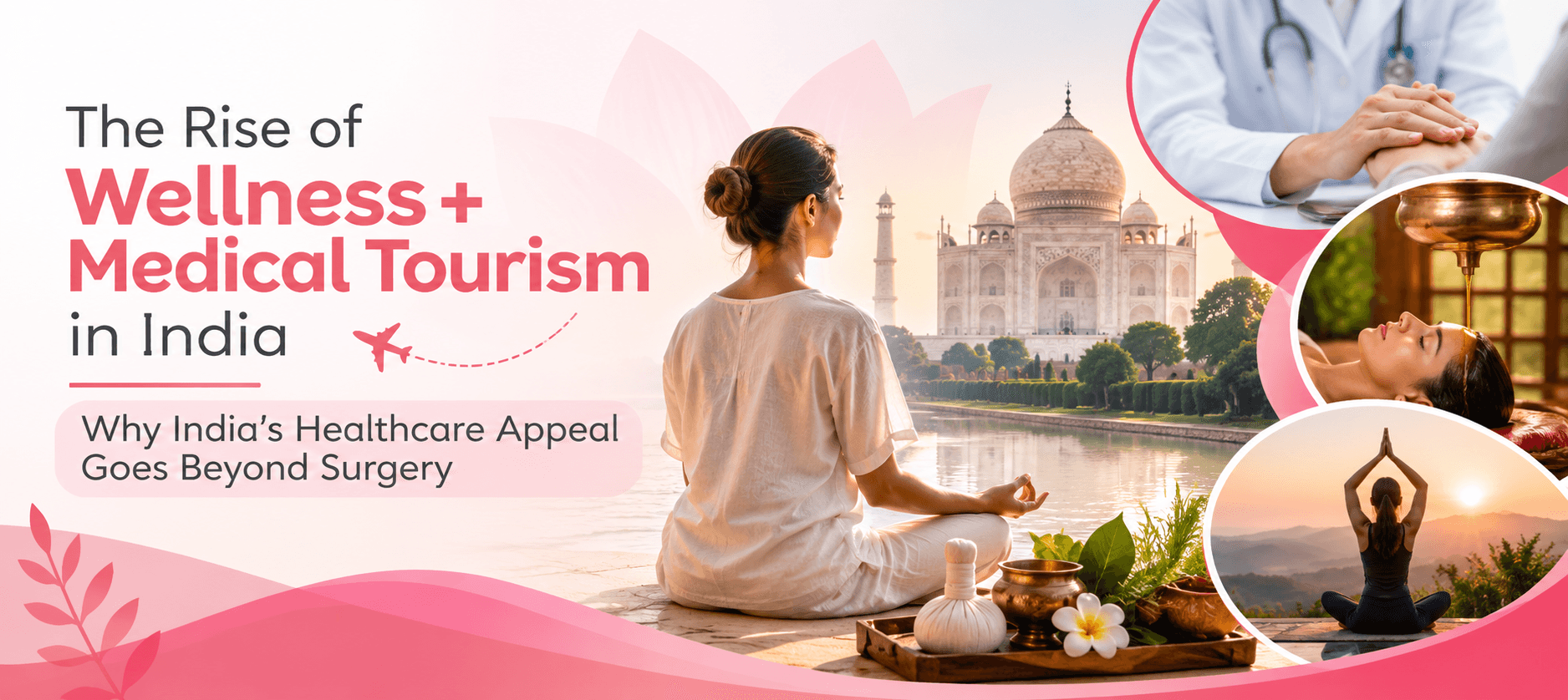
Introduction: The Changing Face of Medical Tourism
Medical tourism has long been defined by a single element: going abroad for a medical procedure. People used to consider hospitals, prices, doctors, and time frames of their recovery while making decisions about where to receive medical services. However, today the perception of people regarding health tourism is changing slowly but steadily.
Nowadays, people do not need to go through a medical procedure in a hospital exclusively. Today, foreign patients consider not only procedures themselves but also pre-treatment consulting and preparations, transportation to a place, rehabilitation, recovery, nutrition, and wellness.
The relationship of health and wellness tourism is becoming stronger every year. There are very few countries which combine both fields like India.
India has become famous for its specific treatment and has become an example of a country which possesses traditional healing methods of Ayurveda, yoga, meditation and holistic approach to healthy lifestyle. All those things make the Indian health system unique.
The treatment of an international patient in India is not always limited by a procedure. The journey to India can have many forms depending on individual needs and medical advice of a patient.
As healthcare travel evolves, this broader perspective is changing what patients look for in a destination — and putting India’s unique combination of modern medicine and traditional wellness in the spotlight.
1. From Medical Tourism to Wellness-Integrated Healthcare
Traditionally, medical tourism centered around the therapy itself. Patients used to visit other countries with the aim to undergo some medical procedure and then come back home after completion of the process of treatment. Modern health care journeys, however, become more and more experience-based.
There are many aspects a person could think about when he or she undergoes some kind of medical treatment. Recovery process, assistance, rehabilitation, coping with the stress and keeping a healthy routine while recovering.
This does not mean at all that there is no need in any kind of medical procedures and wellness substitutes them. Wellness just becomes a perfect addition to proper clinical treatments and helps to cover some of the aspects related to the patients' health care journeys.
Especially, it relates to the foreign patients who could need additional support when undergoing treatments because they are far from home. Proper accommodation, nutrition, rehabilitation, psychological assistance, etc., can help to have a well-organized and pleasant experience.
India is one country that readily falls into this new model because the healthcare landscape in India exists along with a long-standing culture of wellness. The practice of Ayurveda, yoga, meditation, among others, has always been a feature of the Indian approach to wellness.
The end result is a more comprehensive definition of medical tourism, one that goes beyond just where the patient gets treated, to include the whole healthcare journey.
2. Why India Is Naturally Positioned for Wellness + Medical Tourism
The appeal of India as a healthcare destination lies in the coexistence of modern medical treatments and practices of wellness. The country offers an expanding number of hospitals and specialists that deliver medical services, as well as a rich background and culture of wellness and health-related practices.
This factor makes the whole medical tourism experience more diverse and complex for foreign patients. In addition to the search for specific treatment at one of the clinics in the country, the patients will also have the possibility to attend rehabilitation courses, consume proper nutrition, do yoga, meditate and attend other wellness practices based on their medical needs.
The diversity of the Indian subcontinent allows patients to experience different forms of wellness practices depending on the region. Thus, Kerala is widely known for Ayurvedic practices, and other parts of the country have formed their reputation as places for practicing yoga, meditating and visiting wellness retreats.
Still, it should be noted that wellness cannot be seen as a substitute for treatment procedures. Patients who travel to the country for surgery or specialized treatment will be mainly interested in clinical care.
With this combination, India has the chance of providing something other than regular medical tourism – a holistic experience of care in which treatment, recuperation, lifestyle, and general wellbeing are all taken into account.
With more awareness among international patients regarding pre-treatment, treatment, and post-treatment care, this type of experience is becoming increasingly relevant for how India’s health service is seen around the world.
3. Ayurveda: India’s traditional contribution to the global wellness
Ayurveda is one of India’s most recognised forms of traditional healing and has been practiced on the subcontinent for centuries. This system of healing is based on maintaining well-being through aspects such as nutrition, lifestyle and routine wellness activities.
In the case of foreign visitors to India, Ayurveda can become a great opportunity to experience an important aspect of Indian culture and wellness. Ayurveda centers and wellness programs in India offer visitors such experiences as traditional healing methods, nutrition advice, yoga, meditation, and lifestyle-based practices.
The increasing popularity of Ayurveda in the field of wellness tourism is also associated with the general trend of travelers’ attitude to health. In addition to healing some specific problems, modern wellness tourists often seek to rest, reduce stress, maintain good routines and well-being in general.
Nevertheless, in the case of medical tourists, Ayurveda should be used with due respect for the context. It should never be viewed as an alternative to diagnostics, surgical interventions, medications, and other evidence-based medicine. However, when needed, wellness traditions can be used as an additional part of the medical journey.
This distinction is particularly important for international patients, who may be unfamiliar with India's different healthcare systems and wellness practices. Understanding what is medical treatment, what is wellness, and where professional medical guidance is required can help create a safer and more informed experience.
In this way, Ayurveda contributes to India’s wellness appeal while remaining one part of a much larger healthcare and medical tourism ecosystem.
4. Modern Medicine and Traditional Wellness – Meeting Point
It would be wrong to consider the increasing number of medical tourists seeking wellness as conflicting with modern medicine. In fact, the two can coexist in one trip as long as each plays its appropriate role.
For instance, a patient who travels to India to receive orthopaedic treatment will need to undergo surgery and later on physiotherapy and rehabilitation. Apart from that, the person will need to consume appropriate nutrition, manage stress, take enough rest and do other things related to wellness.
Moreover, people who receive advanced treatments can find themselves in situations when their healthcare journey includes a wide range of issues apart from the procedure itself. Sleep, emotions, movement, nutrition, follow-up care and many other elements can become important during recovery.
Here lies the unique potential of India and its healthcare-wellness ecosystem. Modern hospitals and specialists will be able to give the necessary clinical knowledge to treat patients, while wellness practices such as yoga, meditation and Ayurveda can become the complementary element of the journey.
For international patients, this integrated perspective can make the journey feel more complete. The focus moves from a single medical procedure towards a wider experience that considers the patient before treatment, during recovery, and after returning home.
5. Why is Wellness Important in Recovery?
While recovery is usually viewed as the phase after a medical procedure, it can include various components of wellbeing including rest, proper nutrition, physical rehabilitation, emotional comfort, and regular check-ups.
The whole process of recovery can seem especially unusual for an international patient because he or she will be far from home and all the usual support systems. Good organization in terms of availability of a good place for recovery, rehabilitation clinics, medical advice and assistance can be helpful.
Wellness becomes important here too. Simple things like keeping the schedule, coping with stress, getting enough sleep, and having a proper diet can influence the process of recovery.
Some people may decide to try different practices such as yoga, meditation or even Ayurveda during their stay, but the choice will depend on each person.
Thus, recovery is not simply going out of the hospital but giving the organism time to recover under proper conditions.
This broader understanding of recovery is one reason medical tourism is increasingly being viewed as a complete healthcare journey rather than a single treatment or procedure.
6. Why International Patients Are Looking beyond the Hospital
Selection of a healthcare destination does not only involve identification of the best hospital or physician. There are many other factors that are taken into account by the international patients seeking medical services.
Traveling to another country for healthcare services requires attention to many practical issues. These include consultation with doctors, paperwork, traveling issues, accommodation, transportation, translation services, and coordination of different phases of treatment. In case patients travel along with their family members or caretakers, all these points gain special significance.
The place for recovery plays a role in patients' preferences. It might involve searching for comfortable accommodation facilities, rehabilitation programs, healthy food, etc.
In this context, the notion of the full-fledged healthcare journey comes into play. Rather than considering healthcare service provision as a one-time event, it is helpful for patients to consider each part of the trip planned according to their healthcare needs.
In this case, the information about the process of treatment, duration, recovery requirements, etc. might help international patients to make better decisions.
As medical tourism continues to develop, the focus is therefore expanding from the quality of treatment alone to the quality of the overall patient experience.
7. India as a Place for Holistic Healthcare Experiences
India provides its own unique mixture of modern healthcare and traditional wellness practices. Foreign visitors can receive specialized medical services along with learning about wellness practices that have existed in India’s cultural legacy for many years.
Ayurveda, yoga, meditation, nutrition, and wellness retreats – all these and other wellness practices available throughout different regions of India can provide an extra element for travelers’ healthcare journeys at the appropriate stage of their recovery or treatment.
At the same time, every traveler has individual healthcare needs. The choice of wellness practices has to be made according to the personal situation of patients and never affect their medical services negatively.
It is the combination of medical expertise and traditional practices that gives India’s healthcare tourism industry such diversity nowadays. Patients visiting India from foreign countries have a chance not only to receive medical services but also to get acquainted with the holistic approach to healthcare and recovery.
8. Supporting the Total Journey of Medical Tourism via Welltara
It takes much more than just choosing a healthcare facility when organizing treatment in a foreign country for an international patient. In order for consultations with the doctor, medical treatments, travel, accommodation, and follow-up to go smoothly, it is often necessary to use the services of a medical travel partner.
The Welltara Company can help international patients at various stages of their healthcare journey in India. The process can start from understanding the needs of the patient and coordinating consultation with the proper hospitals and doctors.
In addition to coordinating medical treatments, the healthcare journey can include additional services such as assisting with travel, obtaining visas, accommodations, transportation, and other practical things. All these can provide convenience to patients and their families by allowing them to concentrate on their treatment and recovery.
Therefore, Welltara is not only connecting an international patient with a healthcare provider but also coordinating various aspects of the trip to ensure that the patient has support prior to, during, and after treatment.
If there are any needs to explore India's wellness facilities along with the medical journey, well-being trips can also be considered.
By bringing medical coordination and travel support together, Welltara helps create a more organised and patient-focused experience for people travelling to India for healthcare.
9. Conclusion: Healthcare Beyond the Procedure
The sphere of medical tourism is developing. For most international tourists, getting healthcare abroad is not only about choosing a clinic where the procedure would be done. The entire process, including consultation, transportation, and recovery becomes an integral part of the trip.
India is perfectly suitable for the developing concept of medical tourism due to the availability of modern medical technologies along with ancient wellness treatments that have been developing in the country for centuries. There are Ayurvedic treatments, yoga, and other experiences that can be combined with healthcare.
Thus, the future of the sphere will consist not only in doing a certain procedure but in providing assistance during the whole journey.
With appropriate medical guidance, it would be possible for international tourists to combine healthcare with recovery and wellness in India.
Frequently Asked Questions
Why is India famous for medical tourism?
There are various aspects that contribute to India’s reputation for medical tourism: specialised healthcare, highly qualified healthcare professionals, modern hospitals and treatment. Additionally, Indian wellness traditions of Ayurveda and yoga attract tourists from abroad to India’s healthcare destinations.
What is the difference between medical tourism and wellness tourism?
The main difference between medical and wellness tourism is that medical tourism is concerned with medical diagnosis and treatment abroad. Wellness tourism deals mostly with the maintenance or improvement of the well-being of tourists through yoga, meditation, diet and relaxation exercises. Sometimes these two types of tourism can go hand in hand during one trip.
How does Ayurveda fit in Indian wellness tourism?
Ayurveda is one of the aspects of traditional Indian wellness culture. Foreign tourists can explore different kinds of Ayurvedic treatments, practices and diets as well as other wellness services in India. However, none of these alternatives is meant to substitute proper medical treatment and consultations.
Can international patients visit wellness places alongside receiving medical treatment?
Depending on the case and the required treatment, suitable wellness programmes can be included in the treatment itinerary.
What should international patients consider before travelling to India for treatment?
The patient needs to consider the healthcare service provider, specialization of the physician, medical treatment plan, period required for recovery, travel procedures, accommodation, post-treatment care and support through the entire process.
How can Welltara assist international patients?
Welltara assists international patients in different areas of their medical travel journey, such as medical consultation, hospital coordination, travel, visa assistance, accommodation, treatment process, and recovery or follow-up process coordination.
Planning Your Healthcare Journey to India?
If you are exploring medical treatment in India and need help understanding the next steps, connect with Welltara to discuss your enquiry and available coordination support.




 Inicio
